 Doc Summary

How to use the Filter Editor to build detailed filters on any field of a record, and how to save a filter as a preset.
Applies to: All users · Module: All modules with a dashboard
Opening the Filter Editor #
- Open the module you want to filter, for example Incidents.
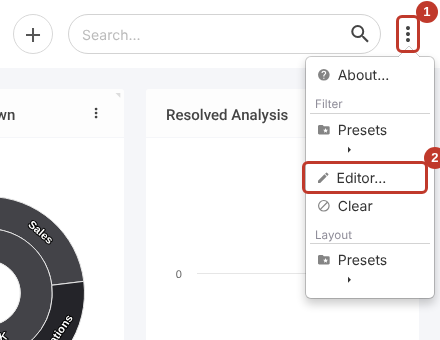
- Click the three dots (⋮) at the top right of the screen (1).
- Under Filter, select Editor… (2).
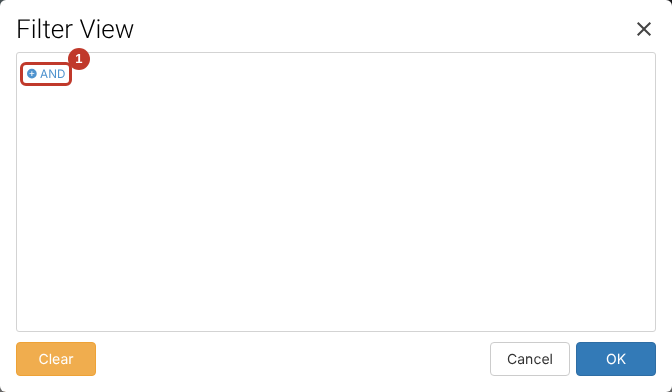
The Filter View opens and shows any filters already applied. To add a filter, click + AND (1).
Adding a Filter #
The Filter Editor can filter on any field of the record, even fields that aren’t shown in the grid.
- Click + AND and pick a field from the list (1).
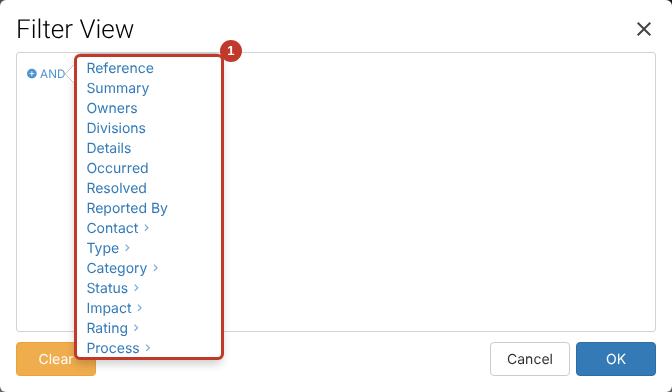
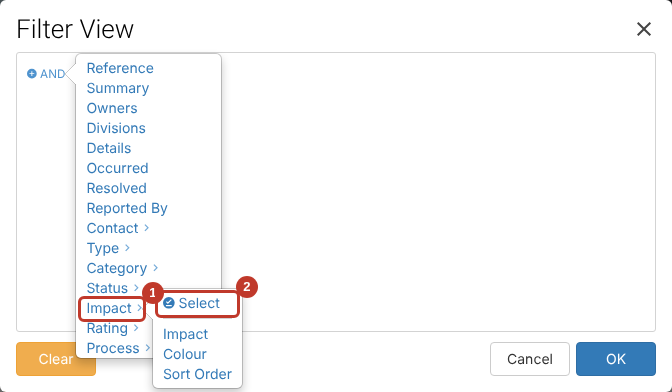
- Fields with an arrow (›) are dropdown fields (1). Pick Select (2) to filter on the dropdown’s value.
The condition is added to the Filter View. It has three parts: the field (1), the operator (2) and the value (3).
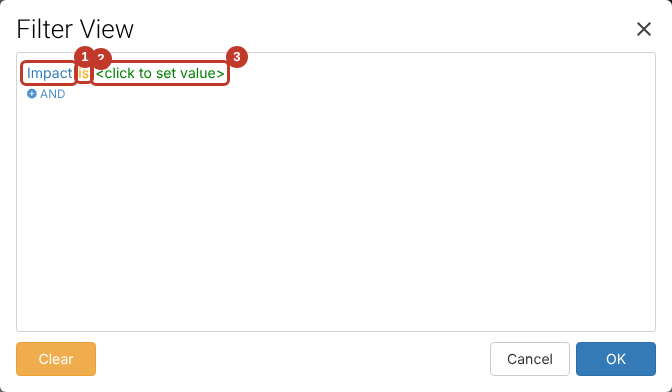
- Click the operator (is) to change how the field is compared (1):
- is: the field has the value.
- isn’t: the field doesn’t have the value.
- exists?: the field has any value.
- doesn’t exist?: the field is blank.
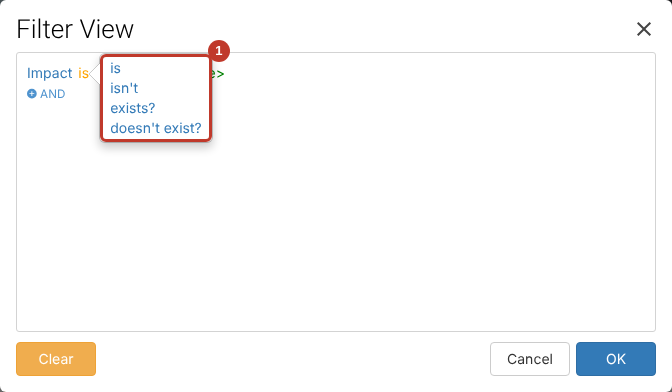
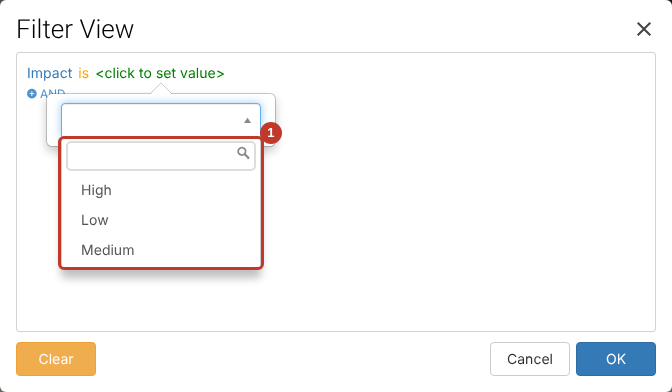
- Click <click to set value> and pick the value from the dropdown (1), for example High.
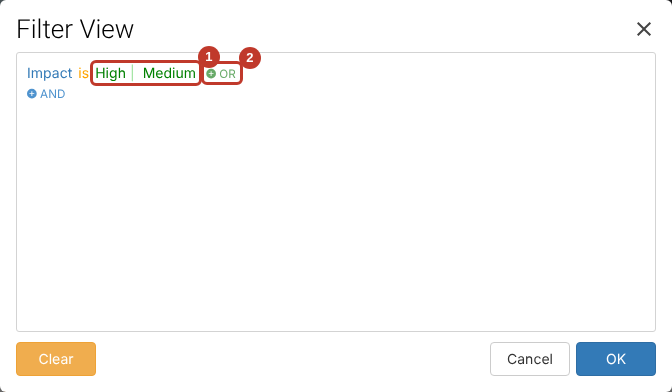
- To match more than one value for the same field, click + OR and pick another value. Here the filter matches incidents where Impact is High (1) or Medium (2).
Adding Multiple Filters #
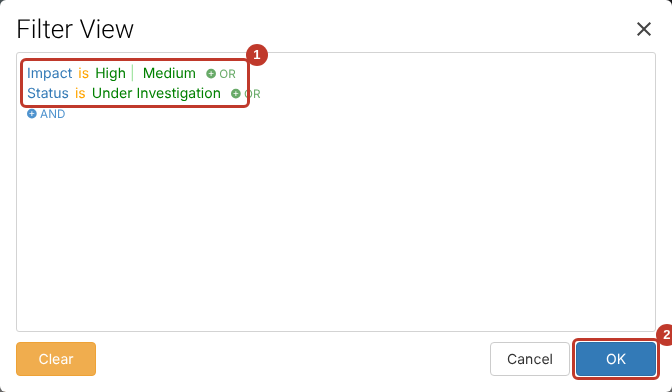
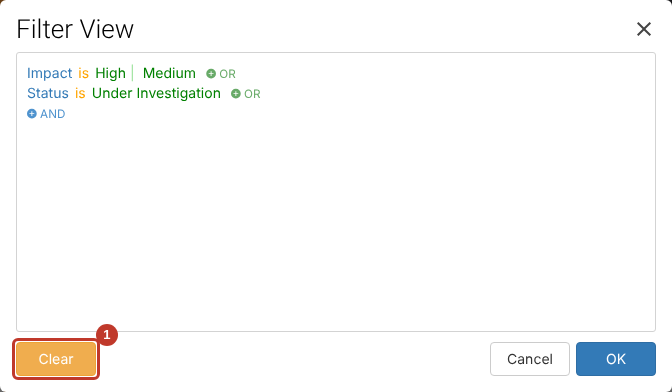
Click + AND again to add conditions on other fields. A record has to match every AND line. In this example, the filter finds High or Medium impact incidents that are also Under Investigation (1).
When the filter is ready, click OK (2).
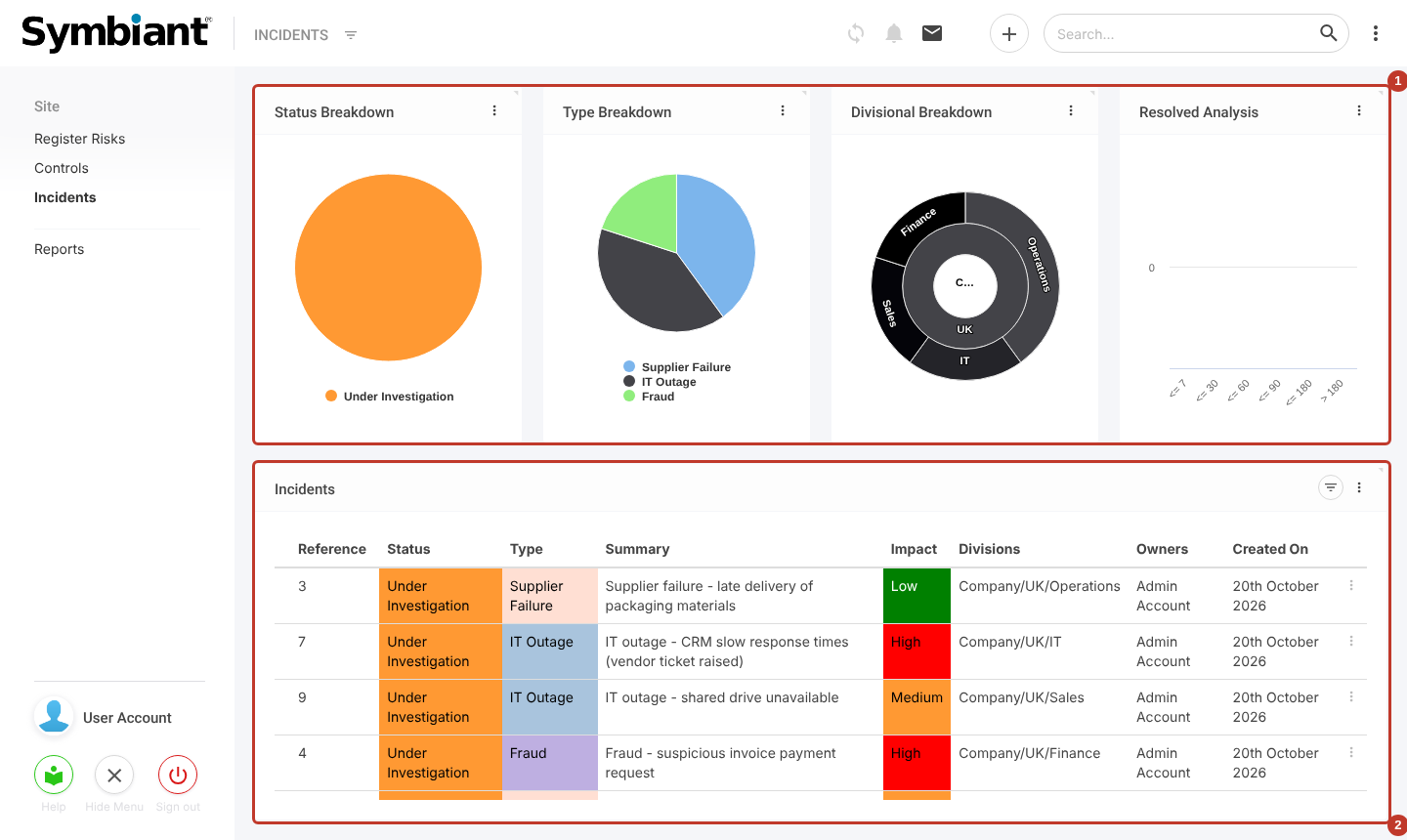
Everything on the dashboard is filtered, including the charts (1) and the record grid (2).
Reopening the Filter #
While an advanced filter is applied, a Filter icon appears next to the module name (1). Click it to go straight back to the Filter View.

Clearing the Filter #
Click Clear at the bottom left of the Filter View (1) to remove all the conditions.
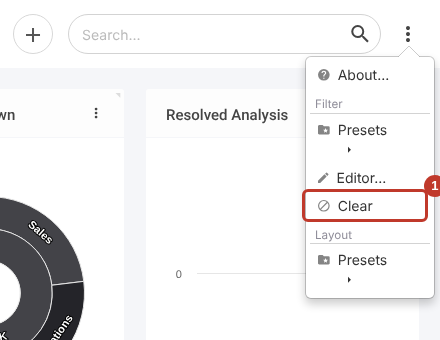
You can also click the three dots (⋮) at the top right and, under Filter, select Clear (1).
Saving a Filter as a Personal Preset #
- With the filter applied, click the three dots (⋮) at the top right.
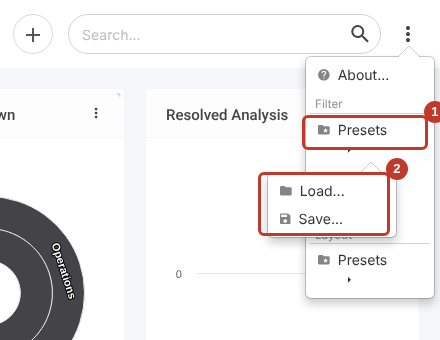
- Under Filter, select Presets (1), then Save… (2).
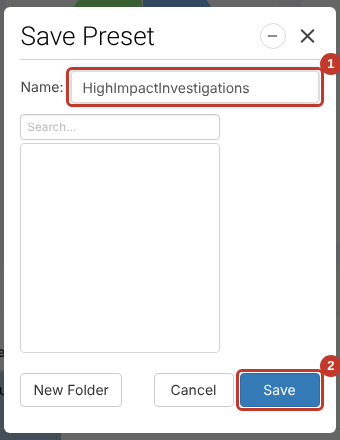
- Enter a Name (1). Preset names can’t contain spaces.
- Click Save (2).
Loading a Filter Preset #
- Click the three dots (⋮) at the top right, then under Filter select Presets and Load….
- Select your preset and click Load.
The saved filter is applied to the dashboard.
Note: A loaded preset stays applied until you leave the module.
Viewing Data at an Earlier Time #
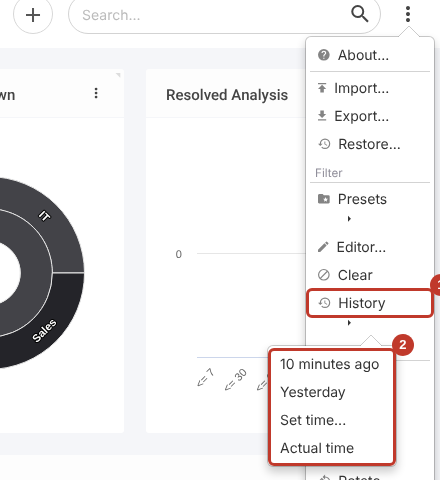
Where your role allows it, Filter > History (1) shows the dashboard as it was at an earlier time, such as 10 minutes ago or Yesterday, or at a time you set (2). Select Actual time to return to the current data. See History for more.