 Doc Summary

How to rearrange the charts and grids on a module’s dashboard: show them as tabs, make them bigger or smaller, group them, and save the layout as a preset.
Applies to: All users · Module: All modules with a dashboard
Accessing a Dashboard #
Every module opens on its Dashboard (list view). This is where the module’s charts and record grid are shown.
- Select a module in the left-hand menu, for example Incidents (1).
- The dashboard loads with the charts across the top (2) and the record grid underneath (3).
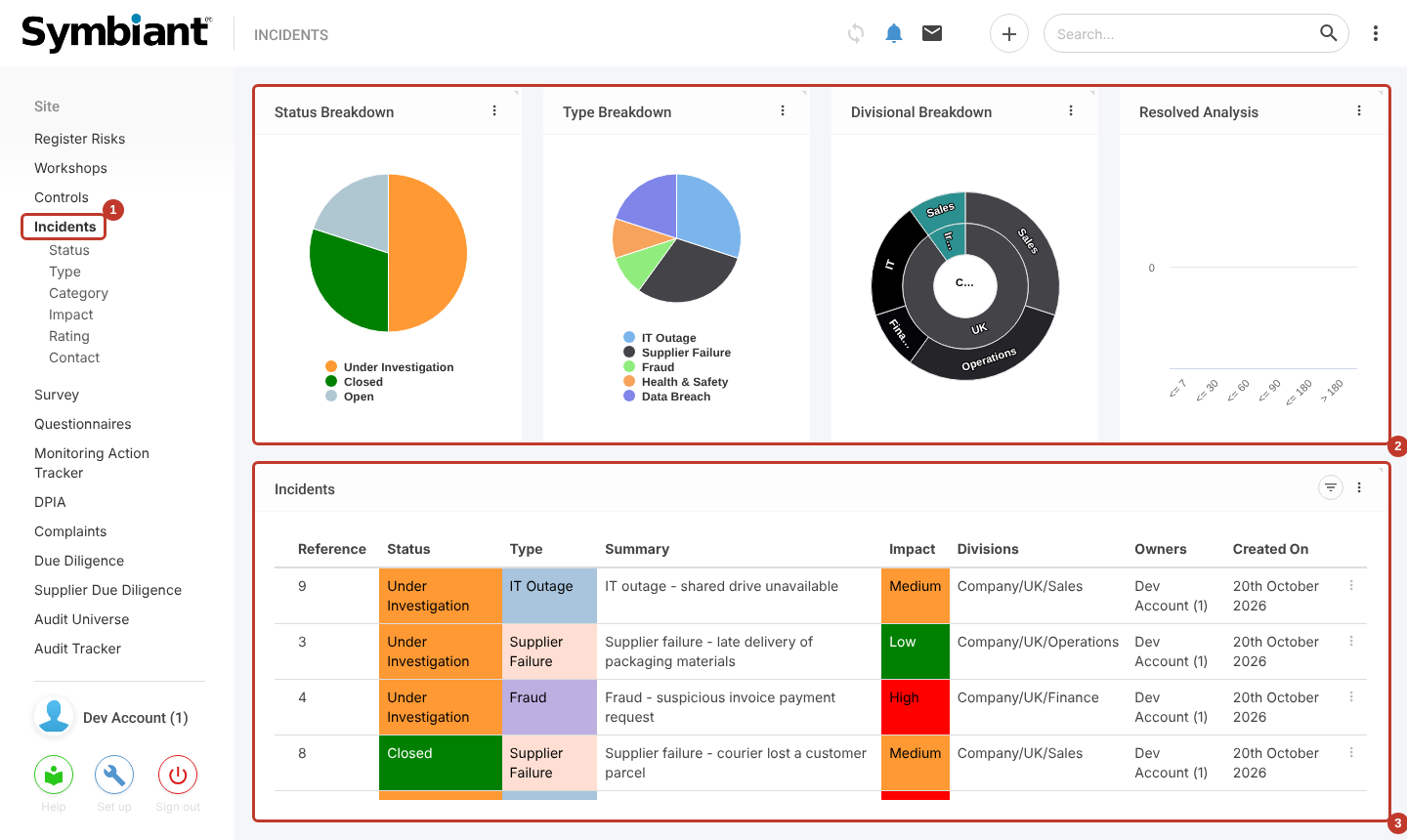
Each chart and grid is an element. Every element has its own three dots (⋮) menu in its top right corner, and the Layout options in that menu change how the dashboard is arranged.
Note: Layout changes only affect your own screen and only last until you leave the module. To keep a layout, save it as a preset (see below).
Which Options You See #
The layout options depend on your role. Many users only see Maximise and Collapse on an element’s menu, and only Load… under Layout > Presets on the options menu at the top right. You can still load the layout presets your administrator has set up, but you can’t rearrange the dashboard or save your own layout.
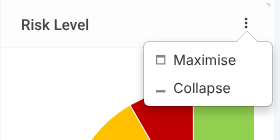
The rest of this article shows the full set of options, as seen by an administrator. If you need them, ask your system administrator.
Showing Charts as Tabs #
Tabs let you show several charts in the space of one, so each chart has more room.
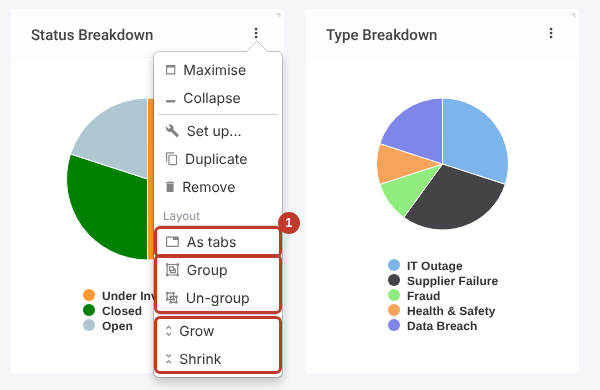
- Click the three dots (⋮) on any chart.
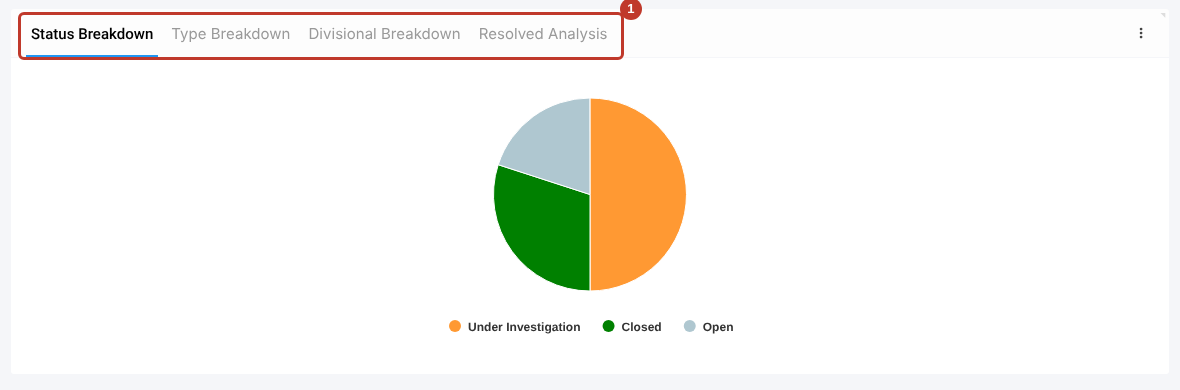
- Select As tabs (1).
The charts in that row are combined into one element, with a tab for each chart (1). Click a tab to switch between the charts.
Growing and Shrinking Elements #
You can make an element take up more or less of its row.
Growing an Element #
- Click the three dots (⋮) on the element you want to make bigger.
- Select Grow (1).
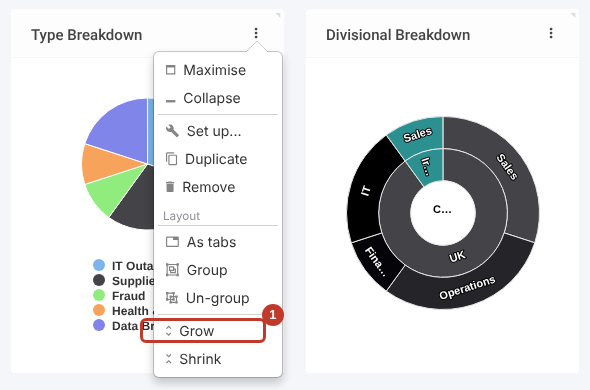
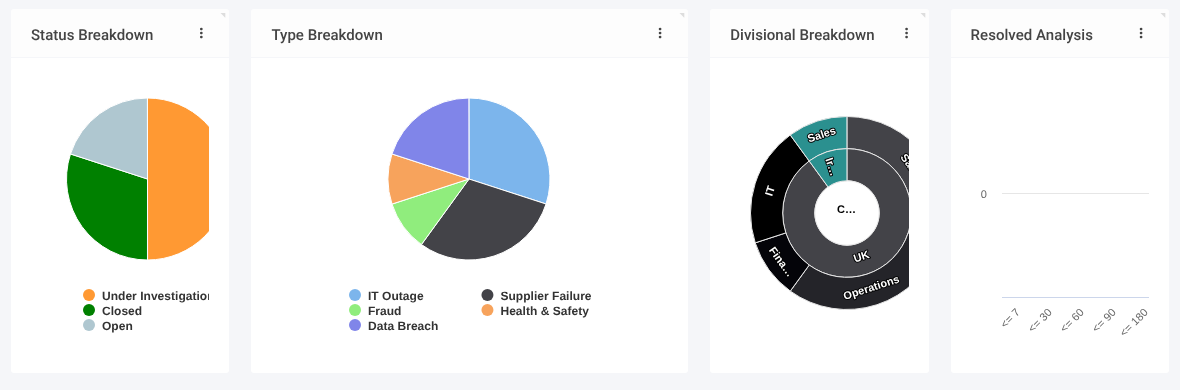
The element gets wider and the other elements in the row get narrower to make room.
Shrinking an Element #
- Click the three dots (⋮) on the element.
- Select Shrink (1).
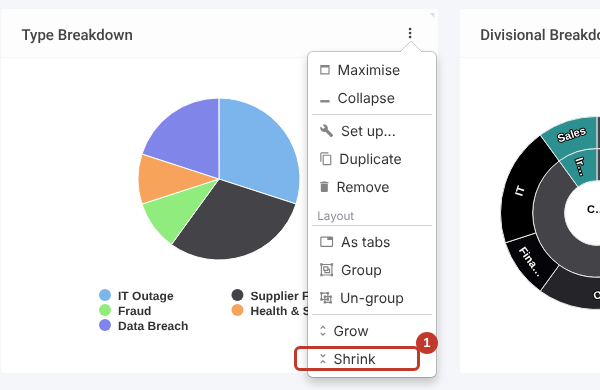
This does the opposite of Grow: the element gets narrower and the other elements in the row gain the space.
Grouping Elements #
Grouping stacks an element together with the element next to it, so they share one column.
- Click the three dots (⋮) on the element.
- Select Group (1).
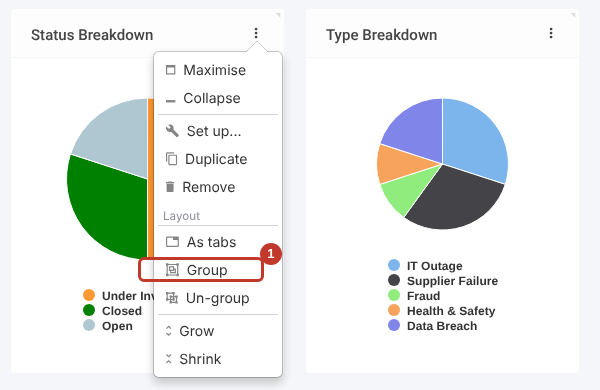
The element and its neighbour are stacked in one column (1), and the rest of the row spreads out to fill the space.
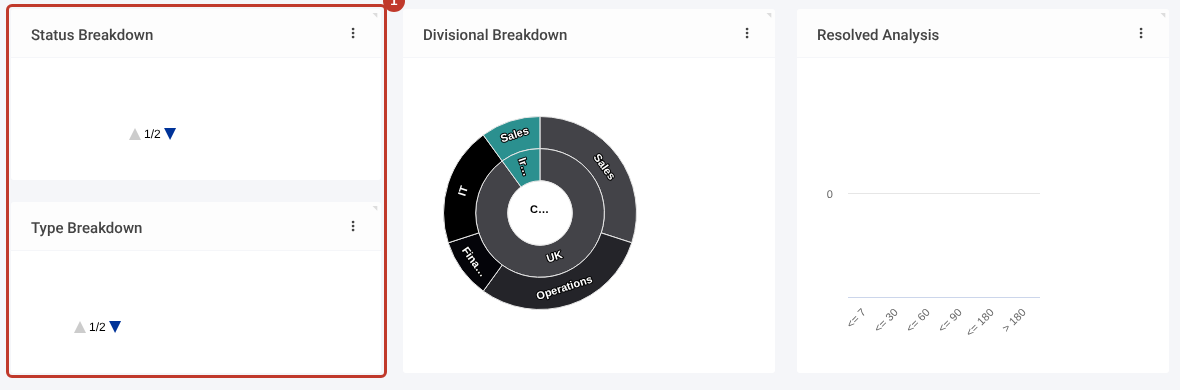
Tip: Grouped charts are shorter, so a chart with a long legend may page its legend (for example 1/2). Use the arrows to page through it, or use Grow on the group to give it more room.
Un-grouping Elements #
- Click the three dots (⋮) on one of the grouped elements.
- Select Un-group (1).
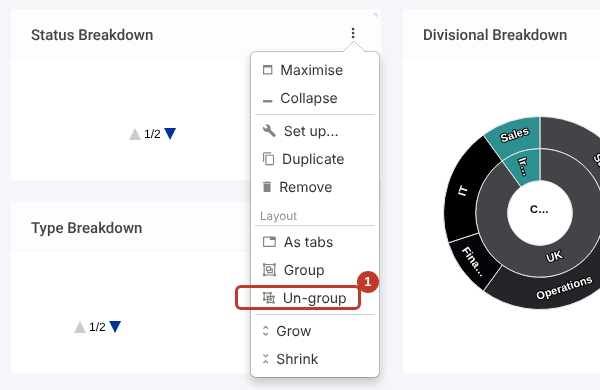
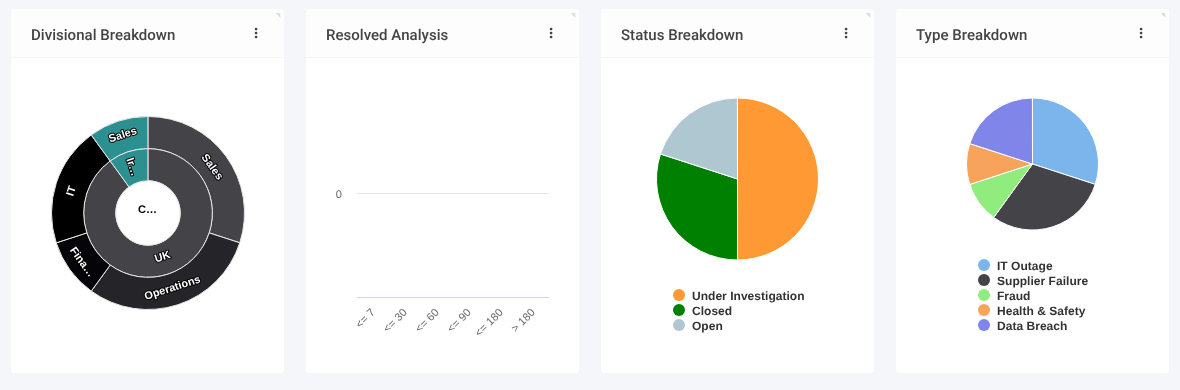
The elements are separated again. They may be placed at the end of the row rather than where they started.
Undoing a Layout Change #
Where your role allows it, you can step back through your layout changes: click the three dots (⋮) at the top right of the screen and, under Layout, select Undo. Leaving the module and coming back also returns the dashboard to its default layout.
Saving a Layout as a Personal Preset #
If your role allows layout changes and you want to keep a layout you’ve made, save it as a preset.
- Click the three dots (⋮) at the top right of the screen.
- Under Layout, select Presets (1), then Save… (2).
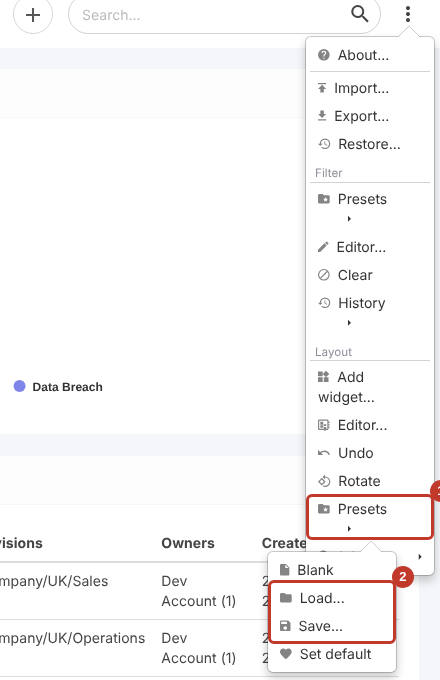
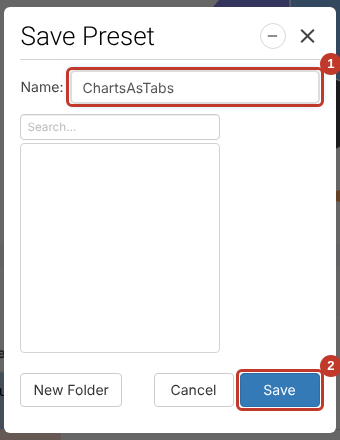
- Enter a Name for the preset (1). Names can’t contain spaces, so use a name such as ChartsAsTabs.
- Optionally click New Folder to keep your presets organised.
- Click Save (2).
Loading a Preset #
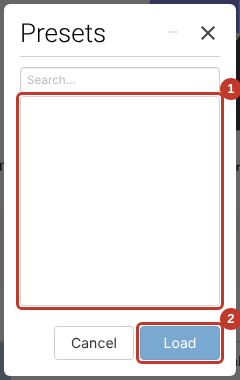
- Click the three dots (⋮) at the top right, select Presets, then Load….
- Select the preset from the list (1).
- Click Load (2).
Note: A loaded preset stays in place until you leave the module. The Presets menu also has Blank and Set default options.
Saving the View for Everyone (Administrators Only) #
Administrators can save a layout as the module’s view, so every user sees it.
- Click the three dots (⋮) at the top right, then Admin (1).
- Select Save… (2) and choose your company-specific view from the list.
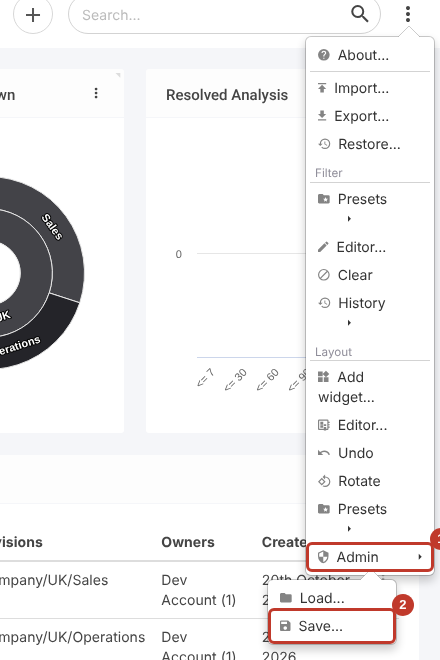
Critical: Saving here changes the dashboard for every user who has that view. Don’t save over the generic (standard) views. If you don’t have a company-specific view, see Creating Your Own Custom Views first.
After saving, sign out of Symbiant and back in to clear your view cache and see the change.