
 Doc Summary

How to set up and generate the Risk Aggregation Register report, which lists your aggregate risks and the risks linked to each one.
Applies to: Administrators (set-up) and users assigned the report (generating) · Module: Register Risks
Before You Start #
The report reads the aggregate risks from one register, so keep your aggregate risks in a register of their own (in this example, Aggregate Risks). See Risk Score Aggregation for how to link risks to an aggregate risk.
Note: Do not link an aggregate risk to another aggregate risk, or the report will not generate.
Setting Up the Report (Administrators) #
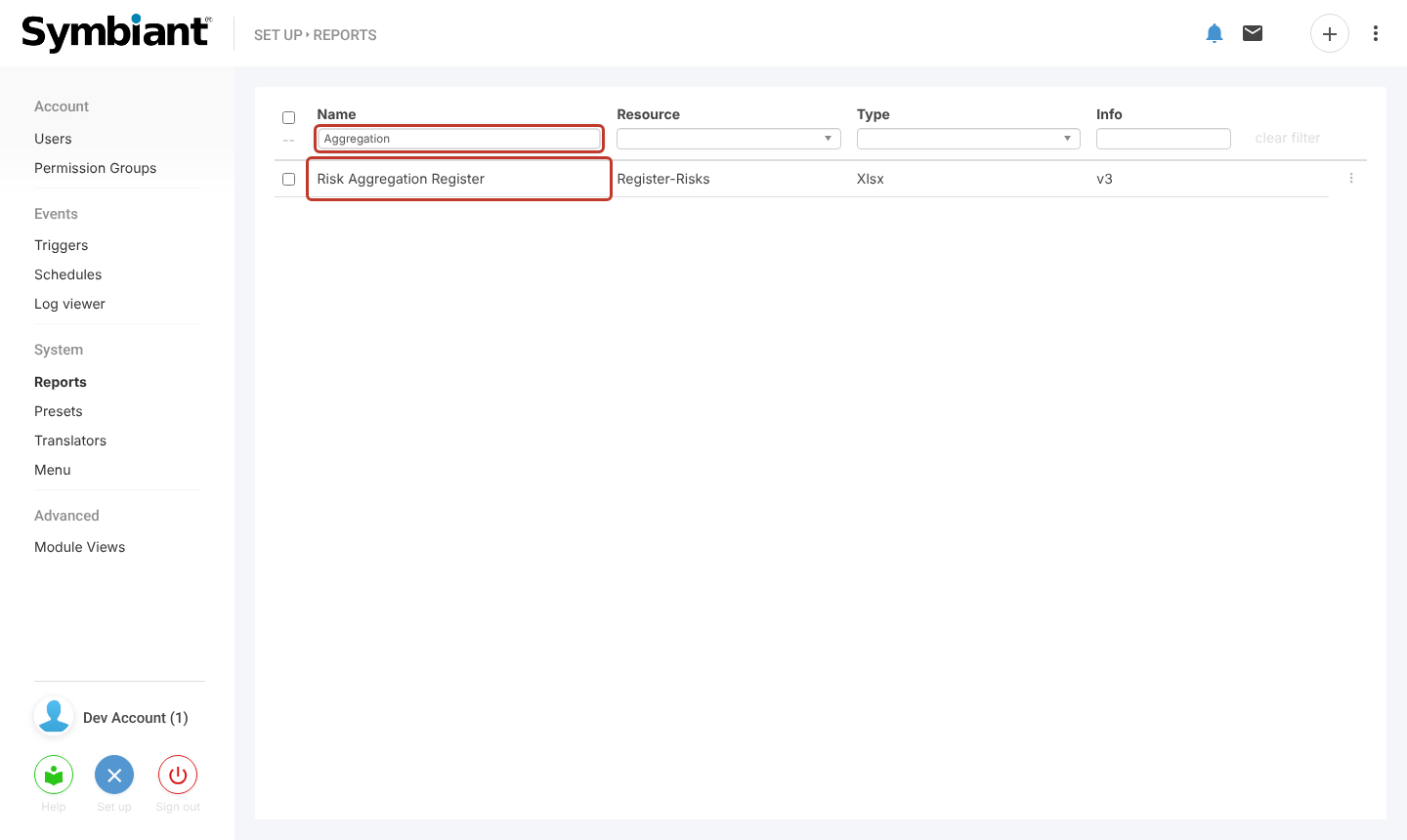
This is a one-off step. Select Set up (the spanner at the bottom left), then Reports. Type “Aggregation” into the Name filter and select Risk Aggregation Register.
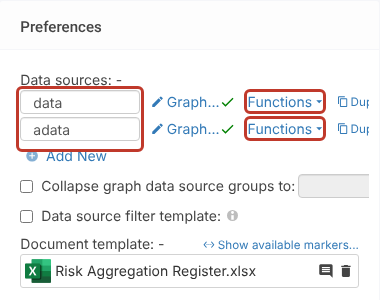
The report has two data sources, data and adata. Both need an attribute filter for the aggregate register. Without it on both, the report will not work.
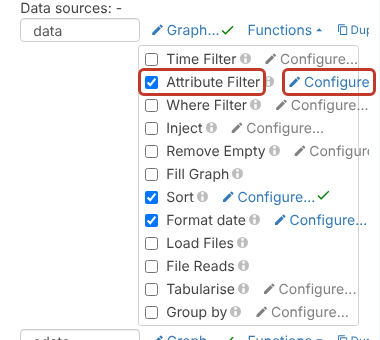
Select Functions next to data, tick Attribute Filter and select its Configure link.
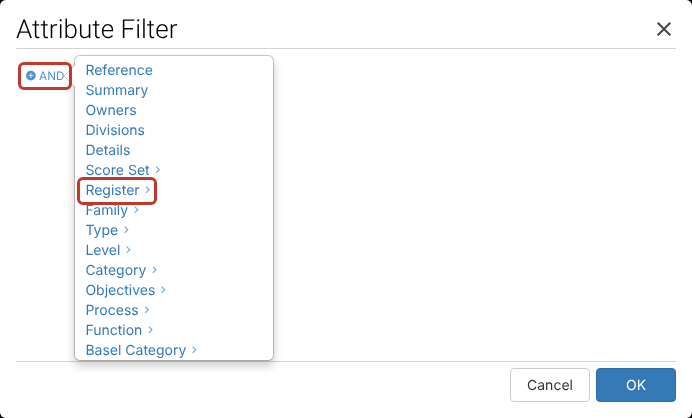
In the Attribute Filter window, select AND, then Register and Select.
Select click to set value and choose the register that holds your aggregate risks.
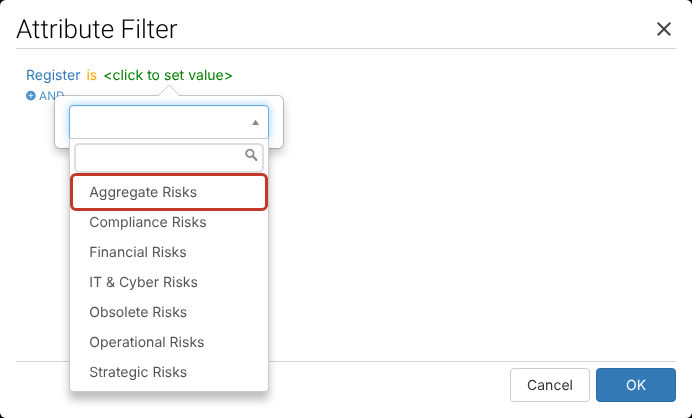
The filter reads “Register is Aggregate Risks”. Select OK.
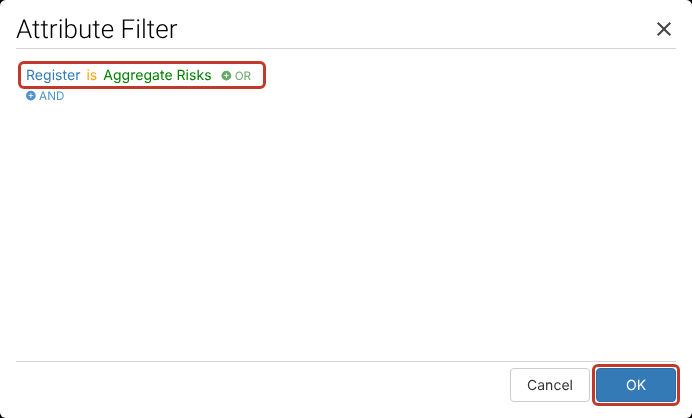
Repeat the same steps for the adata data source, then select Save at the top right.

While you are on the report, check the Users, Roles and Divisions assignments so the right people can generate it.
Generating the Report #
Select Reports in the left-hand menu. Type “Aggregation” into the Name filter and select Generate on the Risk Aggregation Register row.

The Excel file downloads when it is ready. The first sheet lists the aggregate risks, and the following sheets list the risks belonging to each aggregate.
If the report fails to generate, check that the attribute filter is set on both data sources and that no aggregate risk is linked to another aggregate risk.