
 Doc Summary

Every module has an Audit Trail report. It lists each change made to a module’s records: what field changed, the value added or removed, who made the change and when. You can run it for the whole module or filter it to one record, one user or a date range.
Note: Applies to: users whose role gives access to Reports and to the module’s Audit Trail report (usually admins and module managers).
Opening the Audit Trail Report #
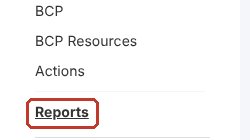
- Click Reports in the left-hand menu.
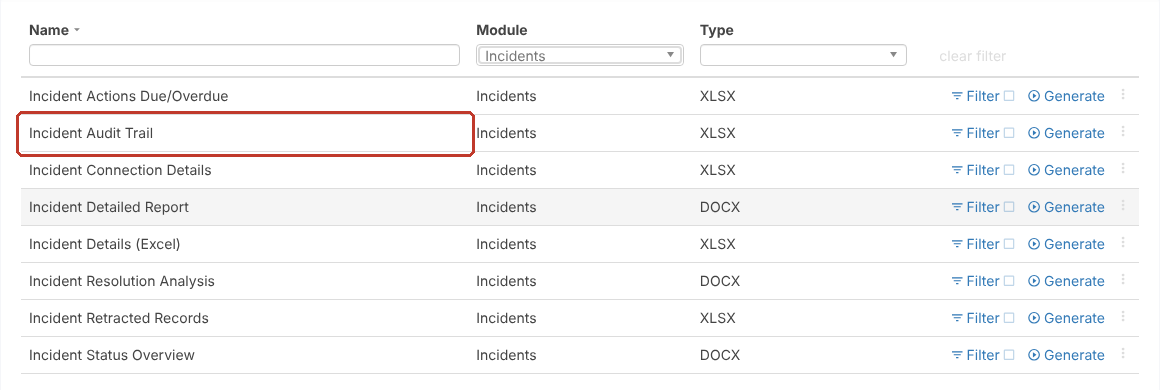
- In the Module filter at the top of the list, choose the module you want (for example Incidents). If a module is already chosen, click clear filter first so the full list of modules is shown.
- Find the module’s Audit Trail report, for example Incident Audit Trail.
Filtering the Audit Trail #
Without a filter the report covers every record in the module, which can be large. To narrow it down:
- Click Filter on the Audit Trail row.
- Fill in any of the options: – Reference or ID: one record, for example
3. – User: only changes made by that user. – From and To: only changes made between these dates.
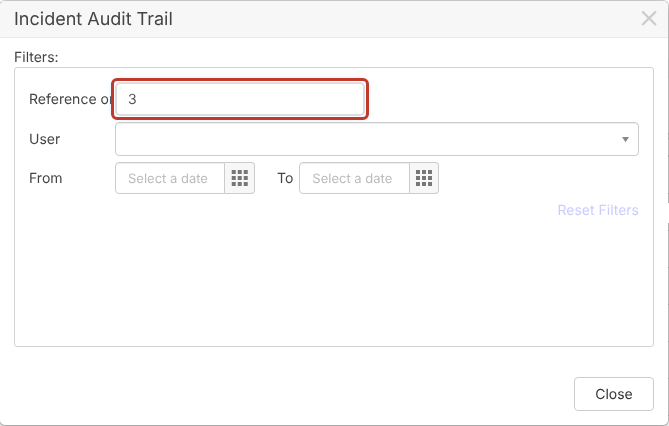
- Click Close. Use Reset Filters to clear them again.
When a filter is in use, the box next to Filter shows a tick.

Generating the Report #
- Click Generate on the Audit Trail row.

- Wait while the report is built. Large modules can take up to a minute.
- The report downloads as an Excel (XLSX) file. Open it from your browser’s downloads.
Reading the Output #
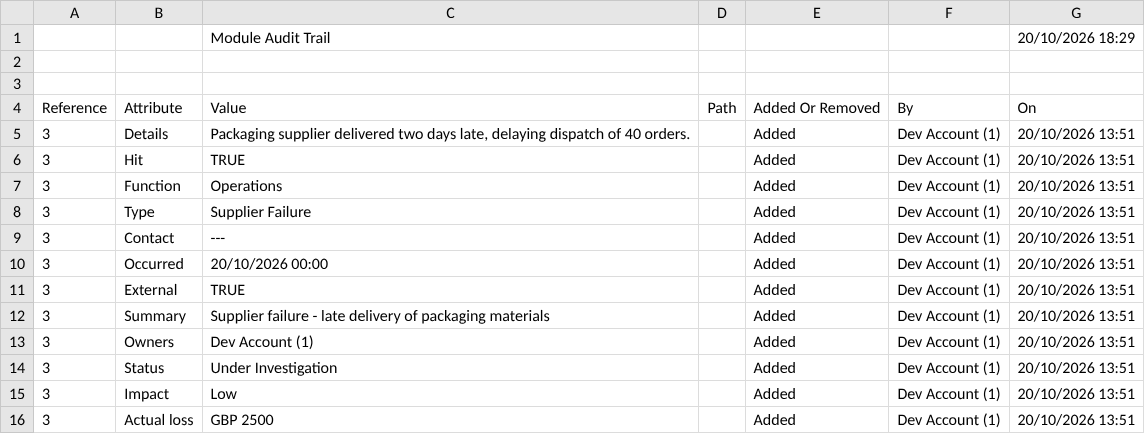
Each row is one change to one field. The columns are:
| Column | What it shows |
|---|---|
| Reference | The record’s reference |
| Attribute | The field that changed |
| Value | The value that was added or removed |
| Path | Where the field sits, for fields inside a grid or sub-section |
| Added Or Removed | Whether the value was added or removed |
| By | The user who made the change |
| On | The date and time of the change |
When a value is changed, you see two rows: the old value Removed and the new value Added.
Tip: To see a record exactly as it was at an earlier time, rather than a list of changes, use Database History.